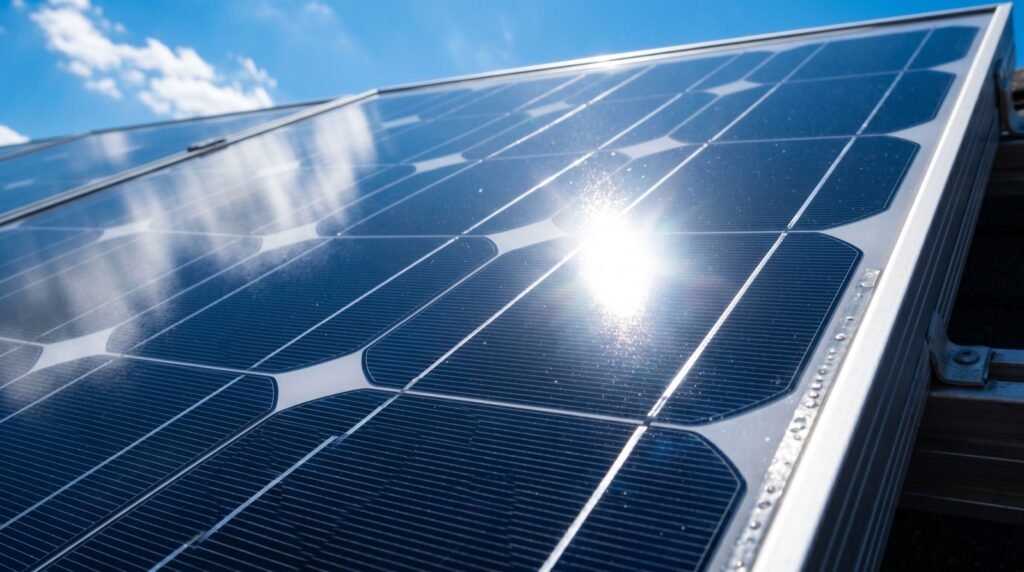
Solar Installation in Islamabad: The 2026 Property Owner’s ROI Guide
For property owners weighing a solar installation in Islamabad, the real question is rarely “does it work?” — it is “does it pay?” In 2026, with electricity tariffs elevated and net metering firmly established, rooftop solar has shifted from a green gesture to a hard financial upgrade that lifts both cash flow and property value. This guide treats solar as the investment it is, complete with payback maths and the levers that move your return.
Islamabad’s clean air, planned rooftops, and generous sunshine make it one of the most favourable cities in Pakistan for solar economics. But returns still hinge on sizing, financing, and installation quality — get those right and the numbers are genuinely compelling.
Solar as an Asset, Not an Expense
Think of a solar array as a machine that prints electricity for 25 years after a one-time cost. Once you frame it that way, the relevant metrics are payback period, internal rate of return, and the boost to your property’s resale or rental appeal. A home in a sector like F-11 or DHA with a paid-off solar system is measurably more attractive to buyers facing the same rising bills you once did.
The payback maths in plain terms
Payback is simply your system cost divided by your annual savings. In Islamabad, a well-designed residential system commonly recovers its cost in roughly four to six years, then delivers effectively free power for the two decades that follow. Net metering accelerates this by crediting the surplus your roof exports on sunny afternoons when you are at work.
What Drives Your Return?
Several levers decide whether your payback lands at four years or seven. Understanding them lets you optimise the investment rather than accept a generic quote.
- Your current tariff slab — the higher your per-unit rate, the faster solar pays back.
- System sizing — matching generation to consumption avoids over- or under-building.
- Net-metering export credit — turns daytime surplus into billing credit.
- Component quality — tier-1 gear sustains output and protects the long-tail return.
- Installation workmanship — poor wiring and mounting quietly erode yield.
Comparing Cash vs Financed Purchase
Not every owner pays up front, and the financing route changes the return profile. The table below frames the trade-off for a typical Islamabad household in 2026.
| Factor | Cash Purchase | Bank-Financed |
|---|---|---|
| Upfront outlay | Full system cost | Down payment only |
| Payback period | ~4–6 years | Longer (includes markup) |
| Monthly cash flow | Immediate savings | Savings offset by instalment |
| Lifetime return | Highest | Slightly lower |
| Best for | Owners with capital | Owners preserving liquidity |
Several banks now offer dedicated green-energy financing, so even owners who prefer to keep cash in hand can start saving from month one. The choice comes down to whether you optimise for total lifetime return or for preserving working capital.
Sizing the System to the Property
Over-sizing wastes capital, and under-sizing leaves savings on the table. A proper design starts from twelve months of your electricity bills, factors in future loads like an EV charger, and then maps generation to that profile. Commissioning a professional solar installation in Islamabad means the design is tailored to your actual consumption rather than a one-size-fits-all package.
The same discipline applies to rental portfolios and second homes elsewhere. Owners expanding to Punjab often pair their capital city project with a solar company in Lahore, where higher cooling loads and larger plots can justify bigger arrays and faster payback.
How Does Solar Affect Property Value?
A functioning solar system with transferable warranties and an active net-metering connection is a tangible selling point. Buyers increasingly price in the avoided electricity cost, and a documented system with clean commissioning paperwork signals a well-maintained property. Research compiled by bodies such as the International Renewable Energy Agency shows rooftop solar adoption climbing steadily across South Asia through 2026, which means the resale audience for a solar-equipped home keeps growing.
A Practical Roadmap to Positive ROI
- Collect twelve months of bills and identify your average and peak consumption.
- Get a professional to size the system against that profile, not a generic template.
- Decide between cash and financing based on your liquidity goals.
- Insist on tier-1 components and a documented workmanship warranty.
- Have the installer manage the net-metering application end to end.
- Track output monthly so you can prove the return when you eventually sell.
Executing this roadmap with trusted professionals who document every step protects both your savings and your resale story. The paperwork you gather now becomes a selling asset later.
Don’t Forget Ongoing Costs
A credible ROI calculation accounts for more than the purchase price. Over 25 years you should budget for occasional panel cleaning, a likely inverter replacement somewhere around the ten-year mark, and periodic professional inspections. These costs are modest relative to the savings, but ignoring them inflates your projected return and leads to disappointment later.
The good news is that solar operating costs are among the lowest of any home system. Panels have no moving parts, monitoring is automated, and a well-installed array in Islamabad’s relatively clean air needs little attention beyond a seasonal rinse and an annual check-up.
Timing Your Investment in 2026
Many owners ask whether they should wait for prices to fall further. In practice, every month spent on grid power at elevated tariffs is a month of savings forgone, and net-metering terms have historically tightened rather than loosened over time. Locking in today’s export credit and today’s tariff differential usually beats waiting for a marginally cheaper panel.
- Elevated tariffs make current savings unusually large.
- Net-metering credit is best secured under existing rules.
- Every delayed month is savings you never recover.
- Component prices have largely stabilised, so waiting yields little.
Frequently Asked Questions
What is the payback period for solar in Islamabad?
For most homes on higher tariff slabs, a cash-purchased system pays back in roughly four to six years. After that, the electricity it generates is effectively free for the remaining 20-plus years of panel life.
Does solar really increase my property’s value?
Yes. A paid-off system with transferable warranties and an active net-metering connection reduces a buyer’s future running costs, which makes the property more attractive and supports a stronger asking price.
Is financing a solar system worth it?
It can be. Green-energy loans let you start saving immediately with a smaller upfront outlay. The lifetime return is a little lower than a cash purchase because of financing markup, but the cash-flow benefit begins right away.
How do I protect my return over 25 years?
Buy tier-1 components, choose an installer with strong after-sales support, and monitor output monthly. Catching underperformance early and keeping warranty paperwork intact preserves both your savings and resale value.
The Investor’s Takeaway
A solar installation in Islamabad is one of the rare home upgrades that pays for itself and then keeps paying. Approach it like any investment: size it to real data, weigh cash against financing, demand quality hardware and workmanship, and document everything. Do that in 2026 and your rooftop becomes a decades-long, inflation-proof asset that strengthens both your monthly budget and your property’s market value.